Photo by Héctor Suárez De Jesús
By: Génesis Dávila Santiago
12/17/2021
On the outskirts of the University of Puerto Rico, Río Piedras Campus (UPR-RRP), a community can feed and sustain itself with the crops from a garden. These are the few urban areas in the country adapted for neighboring residents’ livelihood, education, and support. Due to this particularity, the initiative known as Orchard, Nursery, and Urban Forest of Capetillo, obtained a stipend of $65,977 from the Forest Service of the United States Department of Agriculture (USDA Forest Service) to continue with its social mission, educational and ecological for one year.
According to the doctoral student and garden coordinator, Natalia Rodríguez Ortiz, the initiative offers direct services for approximately 50 people, including children who attend tutorials for their classes, and students from the UPR-RRP who carry out their internships in the place.
“The garden has shared functions… In short, it is the social and ecological development of the space… In addition to rescuing the place environmentally, the youth is rescued. There is a process of educating both children and adults in the community on environmental issues. Also, the space provides the opportunity for the community to organize around their concerns,” explained Rodríguez Ortiz.
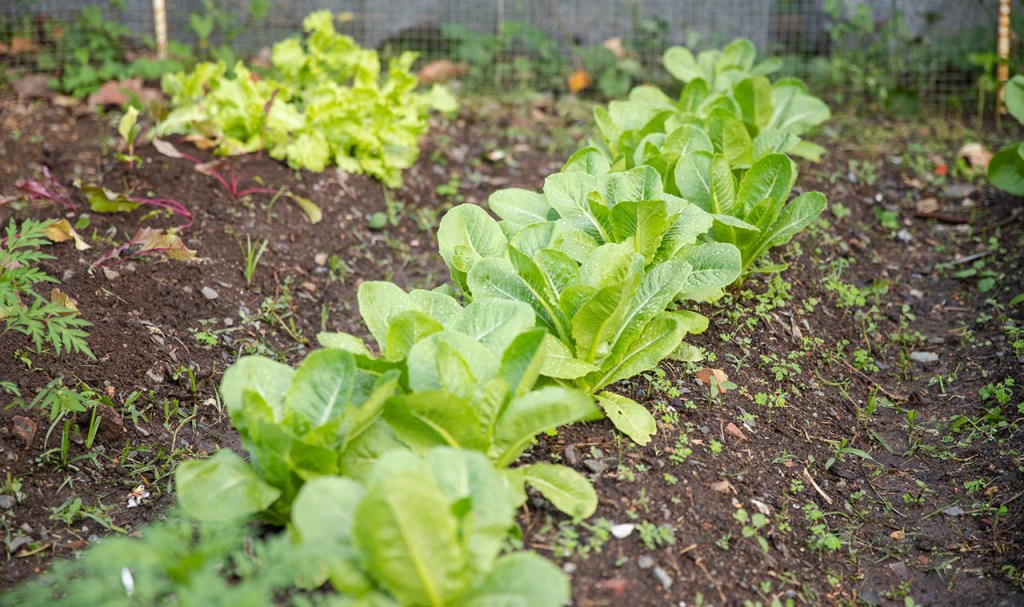
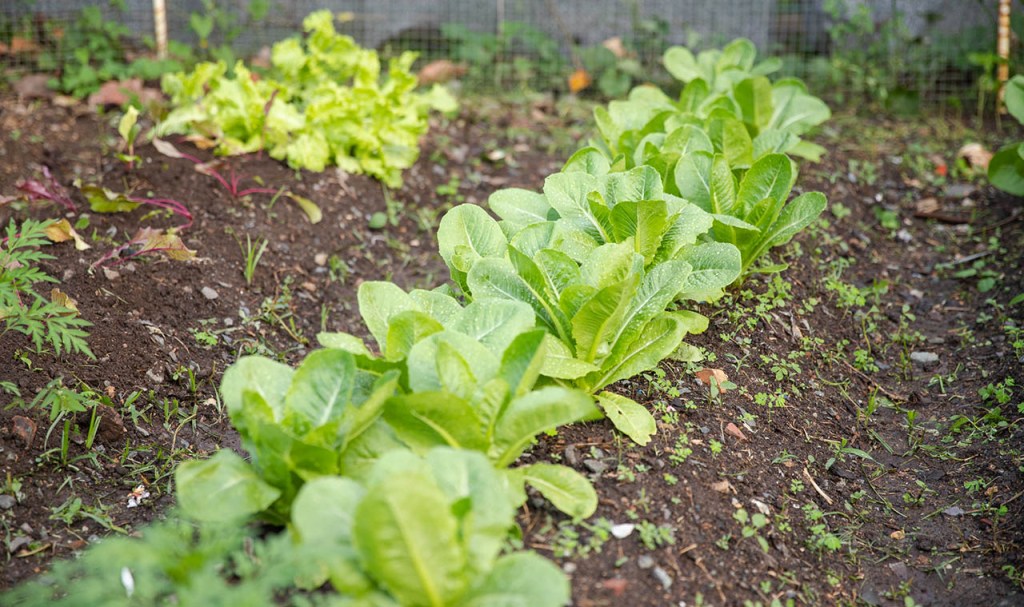
The project is managed by the Center for Urban Community and Business Action (CAUCE, in Spanish), attached to the Rio Piedras area, which is dedicated to rehabilitating urban areas in Río Piedras, and according to the 34-year-old environmentalist, it was formally founded in 2008 with the sale of compost, but now has fruit trees of orange, corduroy, guava, soursop, rose apple, banana; and vegetables such as different types of lettuce, pickles, and tomatoes, among others.
Rodríguez Ortiz also explained that the garden is enabled for children and young people to attend tutorials from which, currently, up to 15 children benefit.
For the director of CAUCE, Mercedes Rivera Morales, the orchard acquired great importance for the community at the beginning of the COVID-19 pandemic, because it allowed bringing supplies to homes in Capetillo and concentrating on childhood education.
«A scaffolding to support education was set up [together with a social worker], providing them with distance tutoring, [and] the materials for that [management] we took home … That helped a lot to … keep studying,” detailed Rivera Morales, while clarifying those tutorials impact students of all ages.
For Rodríguez Ortiz, the orchard has always been important in times of crisis such as Hurricane María, where ice was distributed and other support services were provided to the community, while, for the pandemic, in April and June, the harvests were distributed in their entirety to the community.
It should be noted that the crops from the garden, according to the proposal developed by Rodríguez Ortiz to the Forest Service, are sold to outsiders, but they are free for the community. This system allows people to have a source of healthy food in their community.
Funds awarded by the Forest Service
According to the information provided by Rodríguez Ortiz, the orchard is also home to around 70 trees, of which about 37 are fruit trees. The grant awarded by the federal institution will allow, according to the proposal, to create an inventory of these trees to know the status of each one and promote the maintenance of the forest through the support of an arborist.
In turn, a plan will be established to manage the forest in the long term, develop an irrigation system, and add other species of trees. In the same way, the funds will work to continue the work of educating the community about the management of the forest. To achieve this, a specialist will be hired to create an audiovisual project with an educational function and to document the process.
According to Rodríguez Ortiz, they are currently in the process of recruiting the appropriate personnel to ensure that the tasks are completed by August 2022.
A task that must be replicated
The Capetillo Orchard, Nursery, and Urban Forest initiative represent Rodríguez Ortiz a successful project in which the Río Piedras Campus has played a key role.
“We do not live in a country where everyone has access to basic resources and there are levels of precariousness that are being suffered at different levels. The garden is an example of a place where the community can organize and can achieve goals from the bottom up. So, the university has been very supportive in promoting this process. For me it is important that other people can see it as an example of success and self-management,” he asserted.
From the same perspective, Rivera Morales considers that other UPR campuses and units should imitate CAUCE’s management with the Capetillo community and adopt their communities. In this way, according to the director, great changes are achieved.
«This is a good example of how the campuses can go beyond their gates and adopt concrete projects, [so that there is a link with the work of the community, with the needs of the community … The fact that the university is out there, in another neighborhood, attending to their needs first, not attending an academic need, but attending to their needs … what I see is that they make a difference in the quality of life of those neighborhoods or those communities … That should be an exercise all venues can emulate,” said Rivera Morales.
A Spanish version of this story was published on the University of Puerto Rico’s webpage
 genesisndavila.com
Deja un comentario